Matheos Anin is one of the most colorful characters of Eastern Indonesia. The flamboyant fellow runs a homestay in Fatumnasi located on the trail to the summit of Mount Mutis ( 2,427 meters - 7,963 ft).


Red Karen women.
The representatives of hill tribes in Thailand are disappearing at an alarming rate. I will say they switch to civilian life, leaving their habits and attire. They are been dissolving in Thai society.
Thailand is developing by leaps and bounds, everywhere is electricity, television, and hard-surface roads. If you are really interested in tribal customs and gadgets you should go to Burma.


I was happy when I met a group of women with metal rims on the legs and hands. They wore impressive earrings and metal chokers with house keys.

A woman weaving on the loom sold me her old red blouse and black skirt. ( lucky me :)

 *** Mat recorded the geographical coordinates of this village. I will add the location soon.
 Ready to catch thieves and bad guys in Sumba.
  As a result of penetration of Flores by Christian missionaries, Ngade culture has lost its roots.


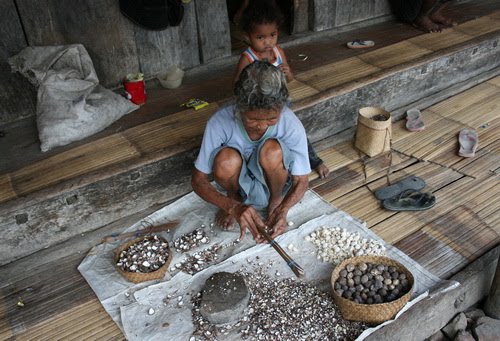 In contrast to Bali and West Sumba, the Ngada culture is l'histoire ancienne.
 My 27 years old guide showed some of his tattoos.

 An ornamental chest tattoo is one of the typical Balinese formulas.
 Light yellow thanaka paste has been used by Burmese since Pyu era.
Thanaka cream is made of wood, bark and roots of Murraya exotica.

 Not all of these tattoos have magical meaning.
 The chap from Mandalay just likes drawings on his skin.


 I hope they can defend their culture and beliefs as the Balinese.
 Many people near Inle Lake have protective tattoos with Nats images. They believe in the great power of their tattoos.
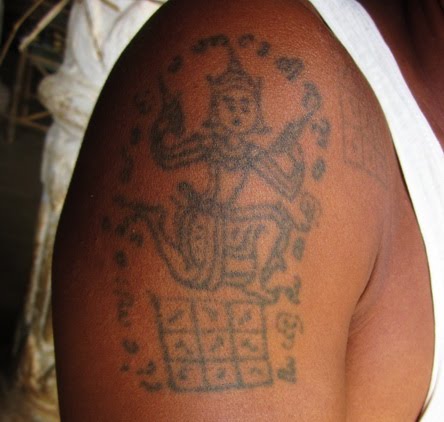 The Nats are often tattooed on their arms.
 A tattoo illustrating some magical characters with lucky numbers complements entire composition and reinforces any action of the arms's image.
 Tamil became the common language of commerce in Malaysia before 18th century. Today the Tamil city dwellers speak mostly Malay or English


 Podrózując wielokrotnie po Malezji, spostrzegałem zawsze ten kraj jako bardziej rozwinięty cywilizacyjnie niż wskazuje na to ranking bankowców. Nowoczesny przemysł, doskonała sieć dróg, najlepsza tania linia lotnicza świata, świetny system edukacyjny i zdrowotny. Taka lista superlatyw w wypadku Malezji moze być bardzo długa.
 Zdziwilem się bardzo, gdy na ulicach Georgetown spotkałem szewca z małym warsztatem "pod chmurką". Nie miałem pojęcia, ze istnieje jeszcze taki zawód w Malezji. Przecież nowe buty można kupić tu za 30 złotych, a całkiem przyzwoite sandały, które sprawdzają się najlepiej w tropikalnym klimacie kosztują 20 złotych.
 A może stanowisko szewca w historycznej cześci Georgetown jest opłacone przez UNESCO ?
 Piękne są stare zawody ;-)

