Showing posts with label temple. Show all posts

Wednesday, August 8, 2012

Amulet z Wat Chom Thong.

Lubię złoty kolor w Tajlandii. Jest to barwa władzy i prestiżu. Każda świątynia jest napakowana złotem i złotą farbą. Złoty dominuje w umysłach Tajów i kojarzy się im z dobrym samopoczuciem. W europejskich głowach najczęściej zieleń sprzyja relaksowi.


Odwiedziny tajskiej świątynii są właśnie relaksem. Nie ma kazań, nie ma straszenia piekłem i nie ma sztywnych godzin wspólnych modlitw. Panuje pełna demokracja. Każdy relaksuje się przy posągach Buddy  odmawiając swoje prywatne mantry w dowolnie wybranym dniu i porze.
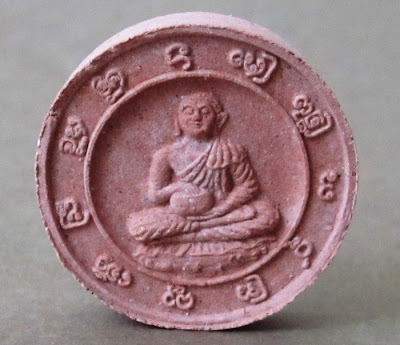


Każda szanująca się świątynia "wydaje" swoje amulety. Wat w Chom Thong, którego pełna nazwa brzmi Wat Phra That Sri Chom Thong założony w VIII wieku również produkuje swoje amulety.


Amulet z roku 2549 wybity przez mnichów z gliny i sekretnych substancji jest w obiegu od 6 lat. Pieniądze zebrane ze sprzedaży amuletu służą do prowadzenia renowacji wiekowej świątynii.


Wat leży 60 km od Chiang Mai przy drodze 108 prowadzącej do Mae Sarieng.

Saturday, October 16, 2010

Settawaya Paya at Mingun on Irrawaddy bank.

Bodawpaya was the 6th burmese king of Konbuang Dynasty.

His numerous offspring, including 120 official children was only one of many king's achievements. Bodawpaya annexed Arakan with Mrauk U and Tanintharyi coast on the Kra Isthmus.
In 1790, Bodawpaya began to erect large structures at Mingun, on the bank of Irrawaddy river.


Settawaya Paya is the first place visiting by tourist coming by a boat from Mandalay.

The white Chinthe directed toward the river welcomes every visitor.


Paya built in 1811 resembles the structure of many temples in Bagan, which were repaired and renovated at the same time.


There is a shrine with two images of Buddha and a Buddha's footprint inside the temple.


The area is peaceful here, and nobody bothers tourists.
Since the time of the Yangon riots in 2007, the number of Mingun's visitors dropped dramatically.


Friday, September 10, 2010

Wat Phra Singh w Chiang Mai. Tajlandia

Każdy turysta odwiedza świątynię Phra Singh.
Podczas swojego trzyletniego pobytu w Chiang Mai byłem w Phra Singh wielokrotnie.
Phra Singh ma swoje korzenie w XIV wieku. Przez wieki był niszczony i odbudowywany.
Poranne wizyty są okazją do prawdziwego relaksu. Cały kompleks przypomina park i można sobie gdzieś usiąść na ławeczce i pogrążyć się w dobrej powieści lub we własnych myślach.

Między pazdziernikiem, a kwietniem niebo nad Chiang Mai jest lazurowe i prawdziwa perła architektury jakim jest Phra Singh jest w pełnym blasku.
Phra Singh nie jest martwą świątynią. Oprócz turystów i mnichów spotkacie tu uczniów.

Rozdanie świadect szkolnych jest tutaj jedną z barwniejszych ceremonii.


Viharn odremontowany przed II wojną światową dzięki wielebnemu Khru Ba Srivichai jest prawdziwą wizytówką kulturalnej stolicy Północnej Tajlandii.


Phra Singh położony jest w centrum miasta i łatwo tu dotrzeć od strony Thapae gate.


Friday, January 1, 2010

Temple Luhur Luwatu. Bali

Pura Luhur Uluwatu has the most spectacular location in Bali.


The temple is built on a high cliff.
The place is famous for its beautiful sunsets.
Pura Luhur is an hour drive south of Kuta
Mountainous asphalt road passes Pecatu village, whence it is a pleasant downhill (if you're going on a motorcycle) in an easterly direction.

This place is well known for water sports activities. It's only one mile away to Mebulu Point with fantastic surfing waves.


The cliff path is occupied by a horde of some aggressive monkeys.
Watch out for your sunglasses, and even hair clips or earrings. The local monkeys are incredibly fast.


All visitors must wear a sarong in the temple area.


The temple buildings themselves are very modest.


Tourists have no right to admission to the Pura.

The temples in Bali are open only to the followers of Hindu religion.


I met stubborn Japanese, who tried to enter the temple through all subsequent gates.
I paid for the ticket – he spoke this phrase like a mantra.
Nobody couldn't explain him this rule.
Yes, I met there some nervous tourists and laid back Balinese people.

Stone Ganesha was also cool ;-)

Monday, December 28, 2009

Temple Besakih in Bali.

The temple of Besakih is the greatest in Bali. Balinese call it “Mother Temple”. The temple of Besakih was probably built in the fourteenth century.

The temple complex located on the slopes of Gunung Agung is dotted with impressive the merus.
The meru is a kind of high pagoda with receding roofs in form of cascade made of fiber of the sugar palm. The meru represents the greatest cosmic mountain Mahameru and is the seat of the Hindu gods.
Besakih lies at an elevation of 1000 meters and the most days of the year here are cloudy and foggy. Black merus rising to the misty sky are the hallmark of this Mother Temple.


Every temple in Bali celebrates its birthday on the anniversary of its concecration.

The Besakih’s festivals are considered as the most important and attract people from all over Indonesia and even India.

Because the Besakih temple is a cluster of 22 temples, there are annually 80 festivals.

You can always meet people bringing here the offerings' baskets and cups.


The complex is surrounded by a sequence of corridors and stone stairs.

The are some family shrines in the complex. Some are adorned with the sign OM.

Tuesday, November 10, 2009

Pura Bukit Sari. Świątynia medytacji. Wyspa Bali. Indonezja

Pura Bukit Sari lezy w lesie muszkatowym, zaledwie kilka kilometrów na wschód od Ubud. Świątynia zbudowana w stylu subak pochodzi z XVII wieku. Ile zachowało się tu starych kamieni, jest tajemnicą ? W środowisku leśnym na tropikalnej wyspie drewno, a nawet kamień wygląda sędziwie juz po kilku miesiącach.


Pura Bukit Sari w której medytowali kiedyś kapłani sąsiaduje z wioską Sangeh.
Wejście bezpośrednio od strony drogi zostało zakamuflowane i nowo wybudowana ulica do świątyni wije się zygzakiem między sklepami z pamiątkami, kończąc się na wielkim parkingu.

Nowe chodniki, wymuskane rzezby wskazują na stałą ingerencje ludzkiej ręki.

Pura Bukit Sari nie figuruje w wielu przewodnikach i mozna tutaj uniknąć turystycznych hord nawiedzających inne puri na Bali.

Świątynie na Bali przypominają mi mosty z lian, którymi kroczyłem w odstępach leśnych Afryki Zachodniej. Niby są stare, ale generalny remont odbywa się co 3 lata, bo wszystko butwieje w błyskawicznym tempie. Podziwiam Balijczyków za nienaganne utrzymanie tych wszystkich tysięcy swiątyń. Pura nadają im sens zycia i cieszą oko wszystkich przyjezdnych.


Pura Bukit Sari jest oazą pokaznego stada małp.

Zwierzęta nie są nachalne jak w innych turystycznych miejscach na wyspie. Jest tu ciągle za mało turystów, którzy dokarmianiem małp psują ich morale i savoir vivre.


Przy wejściu do świątyni spotkałem kobietę sprzedającą orzeszki dla małp. Nie kupowałem pokarmu dla małpiszonów. Za drobną opłatą zrobiłem sobie sesję fotograficzna z Balijką.